PRAIRIE DOG RESCUE · STAGE 1

Stage 1 — Discovery, Identification & Reunification

Decide whether intervention is really needed, preserve the exact colony location and give a healthy displaced pup the best safe chance to remain with its family.

AT A GLANCEDo these things before moving on
IDENTIFYConfirm the animal group before choosing a feeding or release plan

Confirm the animal group before choosing a feeding or release plan.

LOCATIONKeep the exact find location; reunification and release depend on it

Keep the exact find location; reunification and release depend on it.

CONDITIONLook for coldness, injury, pet contact, fly eggs and abnormal behavior

Look for coldness, injury, pet contact, fly eggs and abnormal behavior.

VISUAL GUIDE

See the important points for this stage

Gunnison’s Prairie Dog
IDENTIFYGunnison’s Prairie DogConfirm the animal group before choosing a feeding or release plan.© Greg Lasley, some rights reserved (CC BY-NC) · CC-BY-NC · VIEW SOURCE ↗
White-tailed Prairie Dog
LOCATIONWhite-tailed Prairie DogKeep the exact find location; reunification and release depend on it.© Greg Lasley, some rights reserved (CC BY-NC) · CC-BY-NC · VIEW SOURCE ↗
Utah Prairie Dog
CONDITIONUtah Prairie DogLook for coldness, injury, pet contact, fly eggs and abnormal behavior.© Kevin Metcalf, some rights reserved (CC BY-NC) · CC-BY-NC · VIEW SOURCE ↗
Black-tailed Prairie Dog
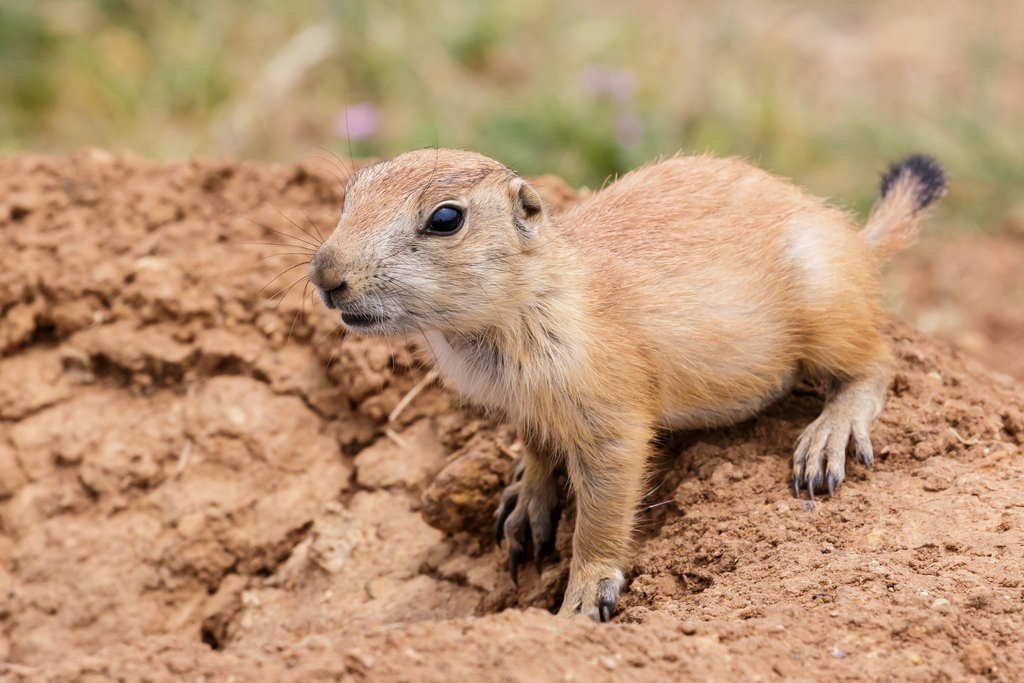
REUNITEBlack-tailed Prairie DogHealthy infants usually benefit most from a safe attempt to return them to the mother.© Meghan Cassidy, some rights reserved (CC BY-SA) · CC-BY-SA · VIEW SOURCE ↗
FIRST GOAL: DO NOT REMOVE A NORMAL EMERGING PUP

Black-tailed prairie-dog pups remain underground for roughly six weeks and are weaned soon after they begin emerging. A fully furred, coordinated youngster beside an active burrow may be in a normal emergence period; a cold, weak, injured or very small pup exposed away from shelter is a different case.

1. Decide whether rescue is actually needed

Likely needs help: cold, wet, weak, unusually easy to approach, visibly injured, covered in fly eggs/maggots, trapped in a structure, or a very young pup found away from a usable burrow.
Urgent professional care: cat/dog contact, punctures, bleeding, fracture, head trauma, seizures, labored breathing, severe dehydration, poisoning exposure or inability to swallow.
May be normal: a fully furred, alert youngster that stays near active burrow entrances, retreats from people and is surrounded by normal colony activity.

2. Identify the species and the town

Prairie dogs are not interchangeable across their range. Photograph the animal and habitat, record a map pin, note whether the tail tip is black or pale, and document the exact town or burrow complex before moving the animal farther than necessary.

3. Reunification at the original burrow area

  1. Wear gloves and keep children and pets completely away.
  2. Use the exact find location; do not choose a random entrance in another part of the town.
  3. If the pup is cool but otherwise stable, give gentle supplemental warmth before attempting reunification.
  4. Place the pup in a low, escape-resistant open container or sheltered box adjacent to the original entrance area, protected from direct sun, rain and predators.
  5. Move well away. Prairie dogs are vigilant and may remain underground while people are nearby.
  6. Watch from a vehicle/building or at long distance during daylight. If normal adults return and the pup moves back into the burrow system, leave the area quiet.
  7. If the pup becomes weaker, the original burrow has been destroyed, no adults remain after a suspected die-off, or the site is unsafe, continue to Stage 2.

4. Record what will matter later

  • Exact map pin, town and burrow entrance
  • Species guess and clear photos
  • Date, time, weather and temperature
  • Nearby construction, flooding, poisoning, trapping or mowing
  • Whether multiple prairie dogs are sick or dead nearby
  • Any person/pet bite, scratch, saliva or flea exposure
  • Initial gram weight when safe to obtain
  • Anything already fed, medicated or applied

Sources