
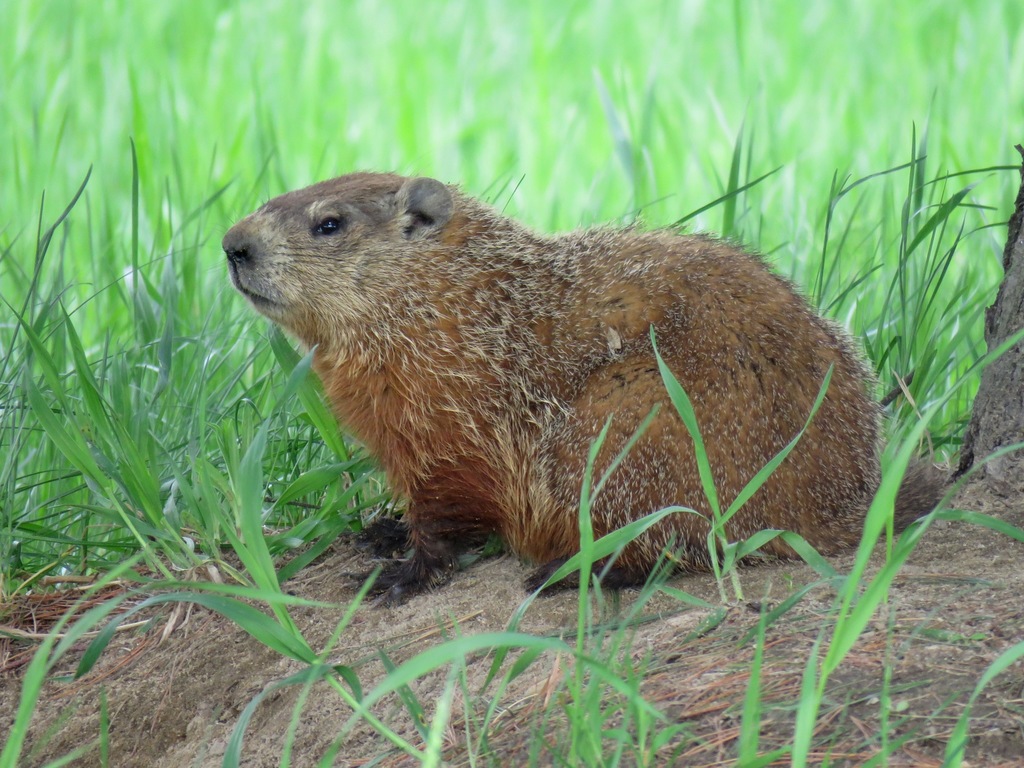

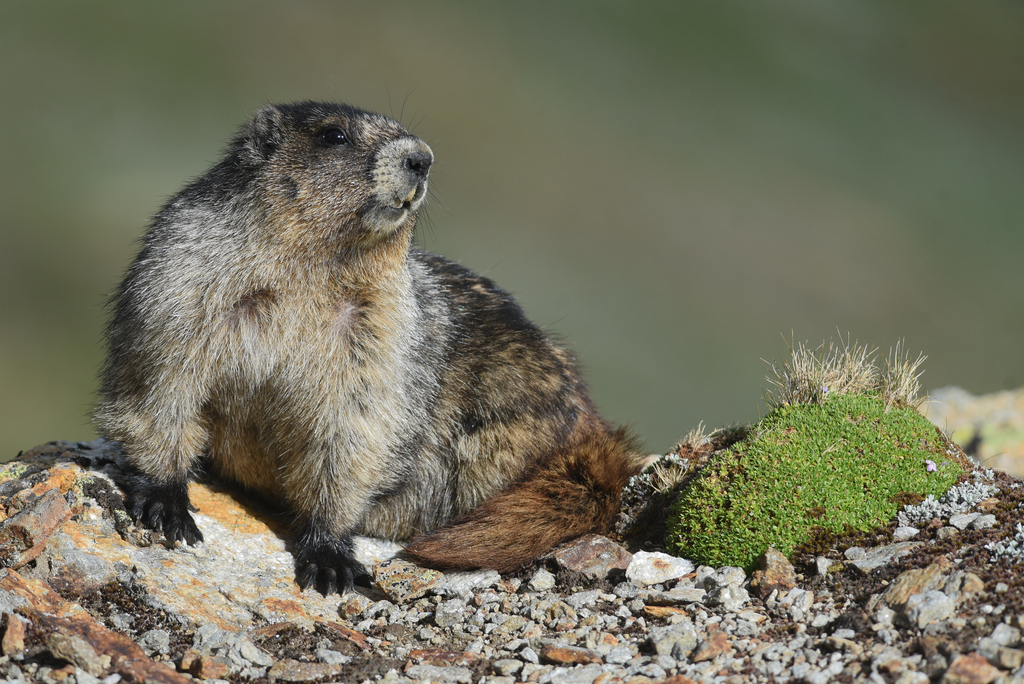
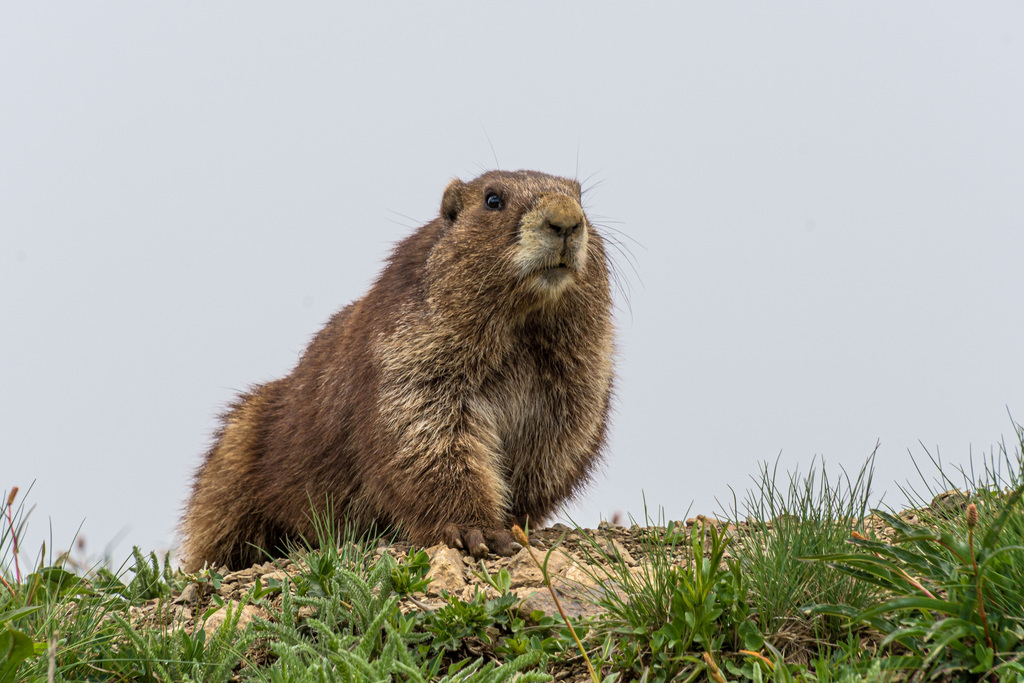
Marmot / Woodchuck
Woodchucks and other marmots. Large body size, powerful digging and species-specific social and hibernation biology require substantially more space than small squirrels.
Natural diet first
Woodchucks are strongly herbivorous and favor forbs such as clover and dandelion, young leafy vegetation and seasonal fruits; other marmots are also plant-focused. Natural feeding is bulk plant foraging, not a nut-and-seed diet.
Build for the body
Think in terms of a small habitat, not a cage. The enclosure should withstand strong digging and chewing, provide deep soil/substrate, a weather-protected den or burrow, open foraging space and shade. Woodchuck burrows in nature can be many feet deep and dozens of feet long, illustrating how much digging behavior the animal is built for.
Do not guess
Woodchucks are generally solitary outside breeding and maternal care, while other marmot species can be much more social. Do not treat “marmot” as a single social category. Grouping decisions must match the exact species and individual history.