
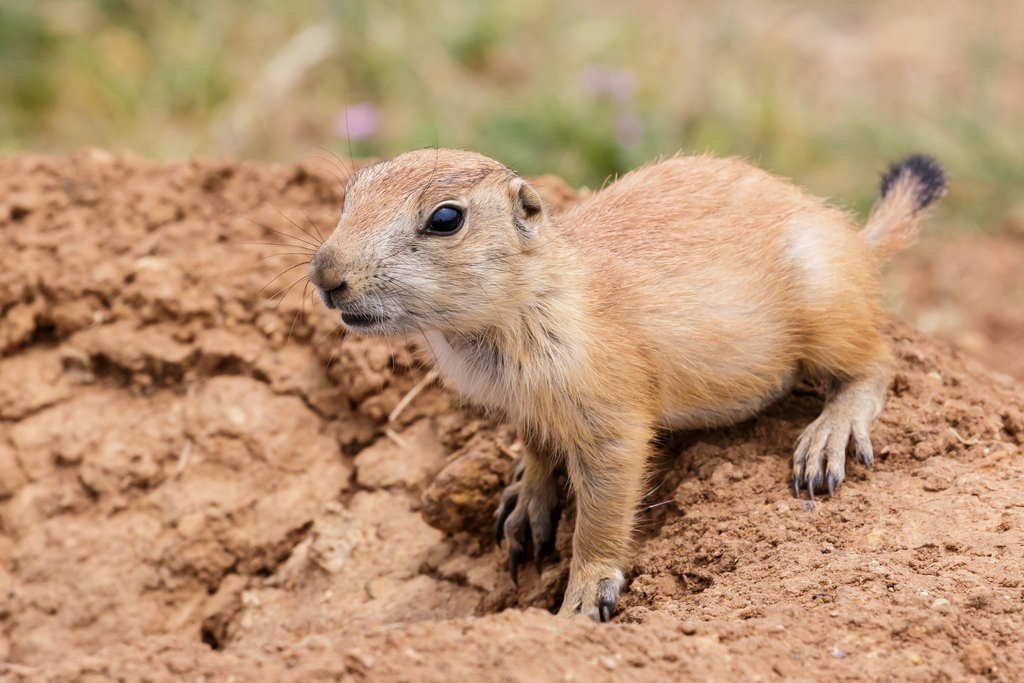


Prairie Dog
Prairie dogs, especially black-tailed prairie dogs commonly kept in human care. Other prairie-dog species differ in dormancy and social ecology.
Natural diet first
Black-tailed prairie dogs are overwhelmingly grazers. Smithsonian reports grasses and leafy vegetation make up about 98% of their wild diet. In human care, high-fiber grass hay is the core food—not nuts, seed mixes or sugary treats.
Build for the body
Provide the largest practical floor area with deep dig substrate, tunnels and nest boxes. Prairie dogs are not climbing animals; tall shelf systems are not a substitute for burrowing space. VCA recommends enough bedding to dig and notes that typical rabbit cages are often not strong enough for permanent housing.
Do not guess
Prairie dogs are highly social and naturally live in family groups. VCA advises that keeping a single prairie dog is generally not ideal unless the caregiver can provide extensive daily social contact. Compatible companions need adequate space, multiple resources and reproductive management.