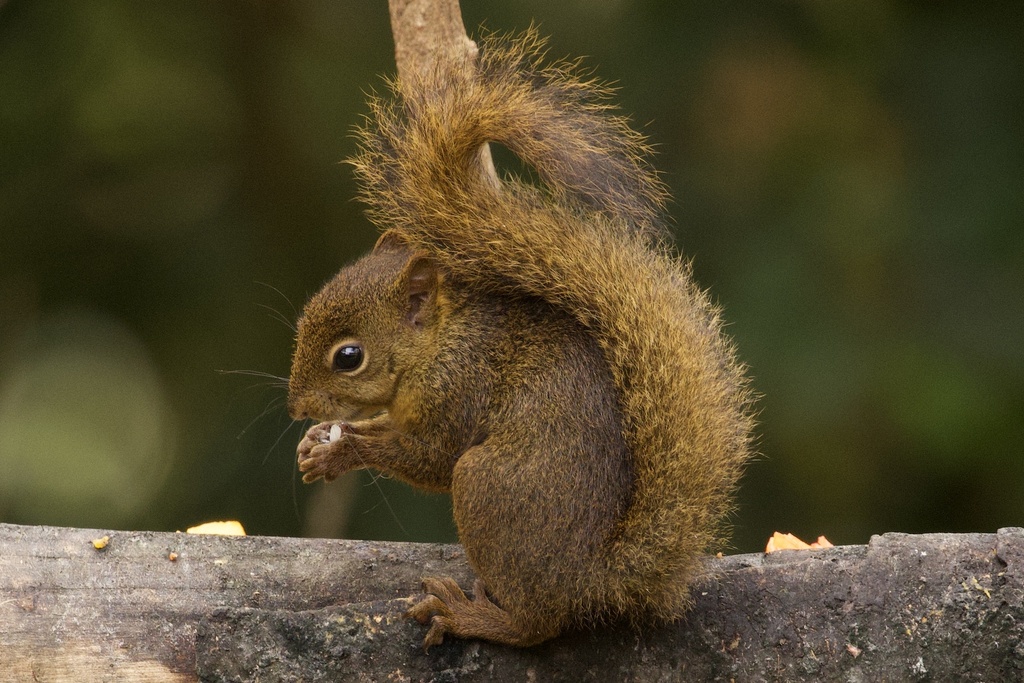
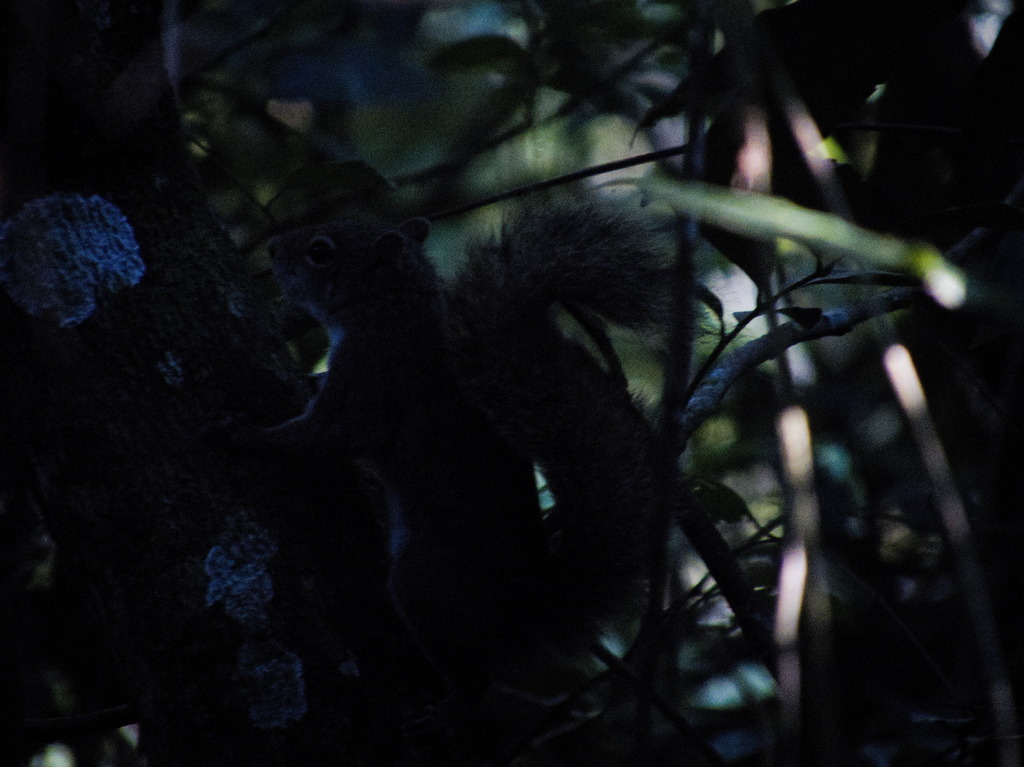
ActivityDiurnal and arboreal, frequently moving on trunks and branches while searching bark and epiphytes.
BreedingUnknown
LifespanUnknown
01
Classification & Taxonomy
KingdomAnimalia
PhylumChordata
ClassMammalia
OrderRodentia
FamilySciuridae
SubfamilyNannosciurinae
TribeNannosciurini
GenusExilisciurus
SpeciesExilisciurus whiteheadi
Authority(Thomas, 1887)
Biogeographic realmIndomalaya
Current name:Exilisciurus whiteheadi. Current MDD: Least Concern
Type / taxonomic context: Borneo
02 · NATIVE RANGE
Distribution
A Bornean mountain squirrel found in Sabah and Sarawak and adjacent parts of Indonesian Kalimantan.
COUNTRIES / REGIONMalaysia · Indonesia (Borneo)
02 · HABITAT
Where it lives
Montane and upland dipterocarp forest, reported broadly from about 600 m to 3,000 m and especially common at higher elevations.
03
Shelter, Nest & Resting Sites
Unknown at reliable species-specific detail.
RANGE & HABITAT CONTEXT
Compare form, setting and structure
Related tree squirrels help break up the reference while showing how habitat, body form and movement can vary across the broader group.
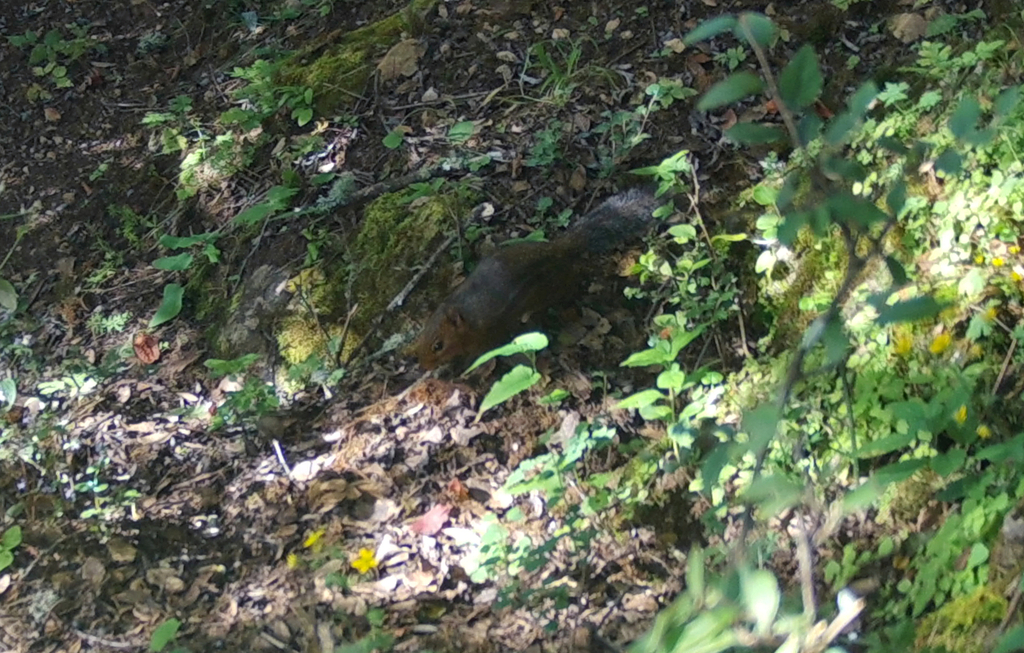
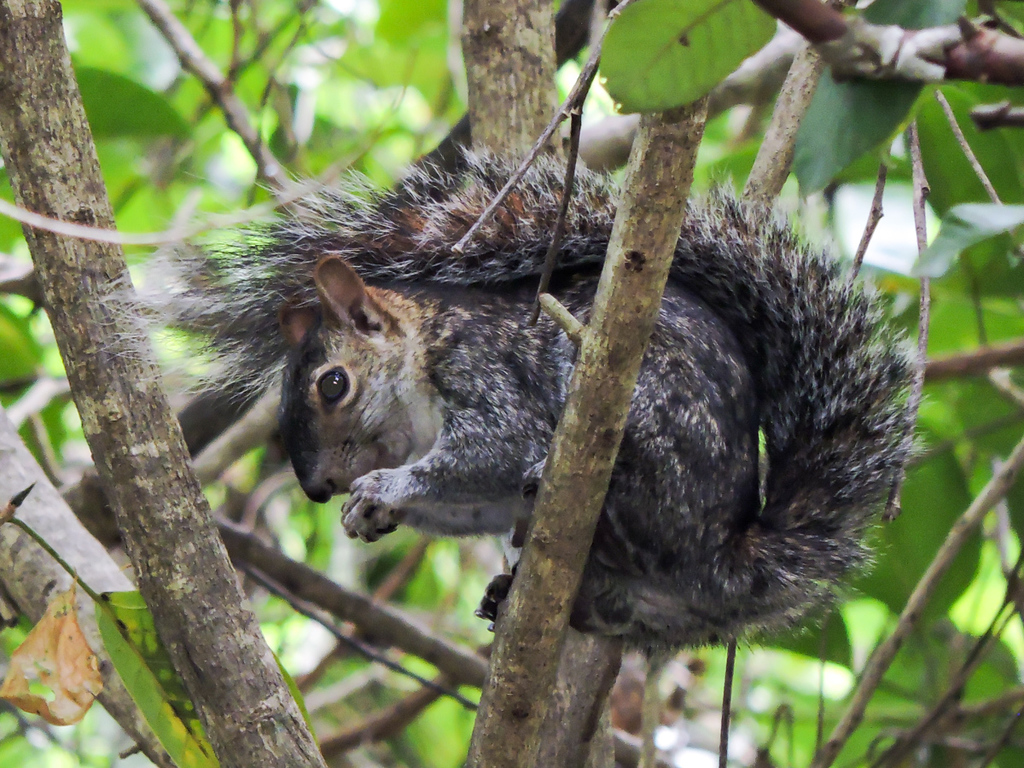
RELATED TREE SQUIRRELForrest's Rock SquirrelSciurotamias forresti — related group reference for visual comparison; not Tufted Pygmy Squirrel.(c) 通通, some rights reserved (CC BY-NC) · CC-BY-NC · VIEW SOURCE ↗RELATED TREE SQUIRRELCollie's SquirrelSciurus colliaei — related group reference for visual comparison; not Tufted Pygmy Squirrel.(c) Cheryl Harleston López Espino, some rights reserved (CC BY-NC-ND) · CC-BY-NC-ND · VIEW SOURCE ↗
04
Identification & Physical Profile
Body length~85–86 mm average
Tail lengthUnknown
WeightUp to ~24 g reported
AppearanceOne of the world's smallest squirrels. It has a tiny body, short face and conspicuous pale or white ear tufts that give the species its common name.
One of the world's smallest squirrels. It has a tiny body, short face and conspicuous pale or white ear tufts that give the species its common name.
FIELD / REFERENCE CLUES
Extremely small body
Distinct pale/white ear tufts
Borneo montane distribution
Rapid trunk-foraging behavior
Exilisciurus proportions
05 · BEHAVIOR & ACTIVITY
How it behaves
Diurnal and arboreal, frequently moving on trunks and branches while searching bark and epiphytes.
Social system: Unknown
Communication: Unknown
06 · DIET & FORAGING
What it eats
Feeds on bark-associated material, mosses, lichens and small invertebrates such as ants; some plant material is also taken.
Mosses
Lichens
Bark-associated material
Ants and small insects
Plant material
07
Reproduction & Development
Breeding seasonUnknown
GestationUnknown
Litter sizeUnknown
DevelopmentUnknown
When a value is shown as Unknown, the reviewed species-specific sources did not support a reliable figure. Values from related squirrels are not substituted.
BEHAVIOR & FORAGING CONTEXT
Keep behavior connected to the animal
These are related tree squirrels, not photographs of Tufted Pygmy Squirrel. Use them as visual context for locomotion, posture, feeding and environmental use.
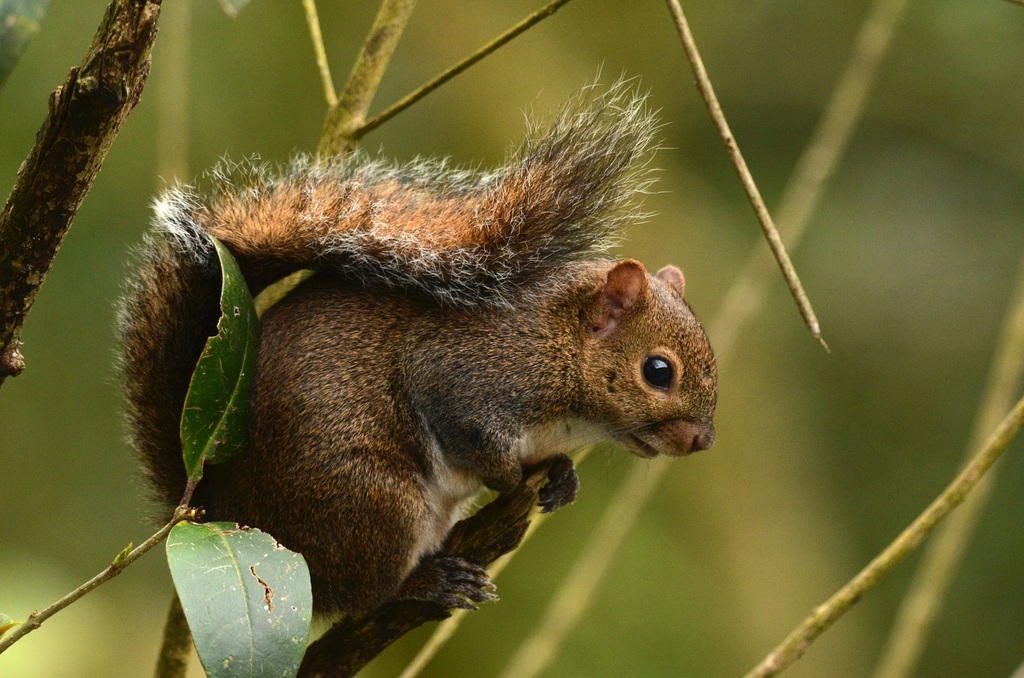
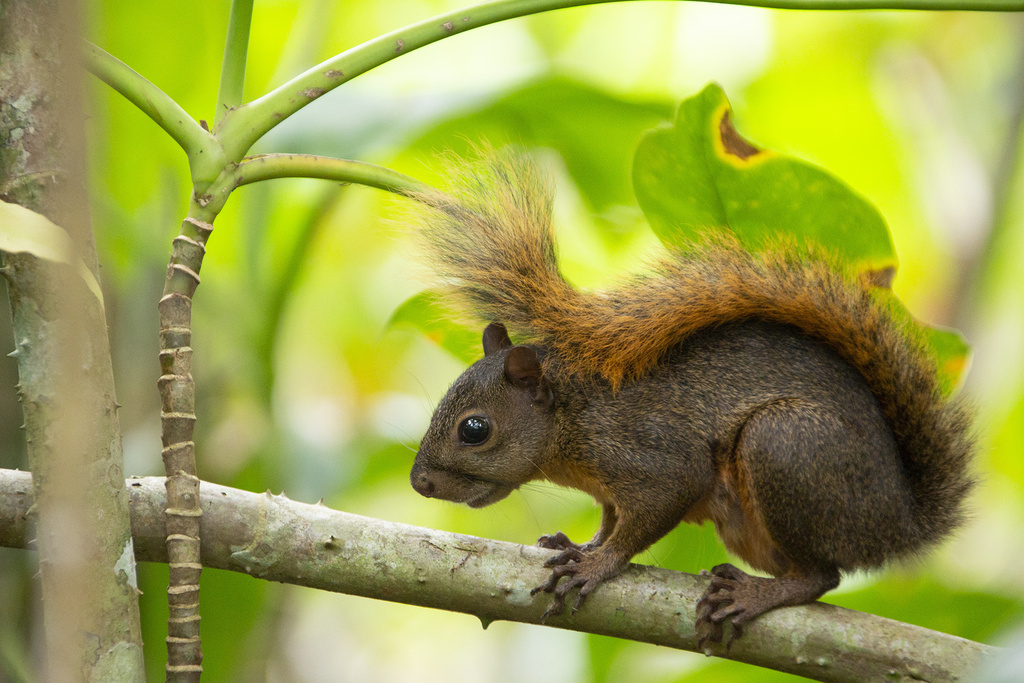
RELATED TREE SQUIRRELDeppe’s SquirrelSciurus deppei — related group reference for visual comparison; not Tufted Pygmy Squirrel.(c) Amado Demesa, some rights reserved (CC BY-SA) · CC-BY-SA · VIEW SOURCE ↗RELATED TREE SQUIRRELRed-tailed SquirrelSciurus granatensis — related group reference for visual comparison; not Tufted Pygmy Squirrel.(c) Joshua Wade Covill, some rights reserved (CC BY-NC) · CC-BY-NC · VIEW SOURCE ↗
08 · LONGEVITY
Lifespan
Unknown
08 · PREDATORS
Predation & Risk
Unknown
09
Ecology & Ecosystem Role
Its small size lets it exploit fine-scale bark, moss and lichen resources unavailable to larger squirrels.
GROUP DIVERSITY
See the wider group around this species
Squirrels in the same broad group can look and live very differently. These credited references provide comparison without changing the facts for Tufted Pygmy Squirrel.
RELATED TREE SQUIRRELBolivian SquirrelSciurus ignitus — related group reference for visual comparison; not Tufted Pygmy Squirrel.(c) o_efua, some rights reserved (CC BY-NC) · CC-BY-NC · VIEW SOURCE ↗RELATED TREE SQUIRRELIngram's SquirrelSciurus ingrami — related group reference for visual comparison; not Tufted Pygmy Squirrel.(c) Miguel A. Paixão, some rights reserved (CC BY) · CC-BY · VIEW SOURCE ↗
10
Conservation
STATUSLeast Concern
Current MDD treatment lists the Tufted Pygmy Squirrel as Least Concern.
11
Research Coverage & Unknowns
Size, distribution and foraging ecology are reasonably characterized, while reproduction, nest biology and lifespan remain poorly known.
12
References & Further Reading
Taxonomy and conservation are anchored to current mammal references. Natural-history claims use species-specific sources where available; unsupported fields remain Unknown.