TREE SQUIRRELS · SPECIES PROFILE

Shrew-faced Squirrel

Rhinosciurus laticaudatus

Near ThreatenedDETAILED REFERENCE
Back to Tree Squirrels →
Body lengthTotal length reported ~290–392 mm
Tail lengthIncluded within total length; species has a comparatively long tail
WeightUnknown
ActivityTerrestrial and primarily forest-floor foraging; detailed activity-cycle studies are limited.
BreedingUnknown
LifespanUnknown
01

Classification & Taxonomy

KingdomAnimalia
PhylumChordata
ClassMammalia
OrderRodentia
FamilySciuridae
SubfamilyNannosciurinae
TribeNannosciurini
GenusRhinosciurus
SpeciesRhinosciurus laticaudatus
Authority(Müller, 1840)
Biogeographic realmIndomalaya

Current name: Rhinosciurus laticaudatus. Current MDD: Near Threatened

Type / taxonomic context: Southeast Asia

02 · NATIVE RANGE

Distribution

Occurs through parts of the Sundaic region, including southern Thailand, the Malay Peninsula, Singapore, Sumatra and Borneo.

COUNTRIES / REGIONThailand · Malaysia · Singapore · Indonesia (Sumatra and Borneo)
02 · HABITAT

Where it lives

Lowland and hill tropical forest, where it spends much of its time on or near the forest floor among leaf litter, roots and fallen woody material.

03

Shelter, Nest & Resting Sites

Detailed nesting and resting-site data are limited. Ground-level cover, fallen wood and dense forest structure are important components of its habitat.

RANGE & HABITAT CONTEXT

Compare form, setting and structure

Related tree squirrels help break up the reference while showing how habitat, body form and movement can vary across the broader group.
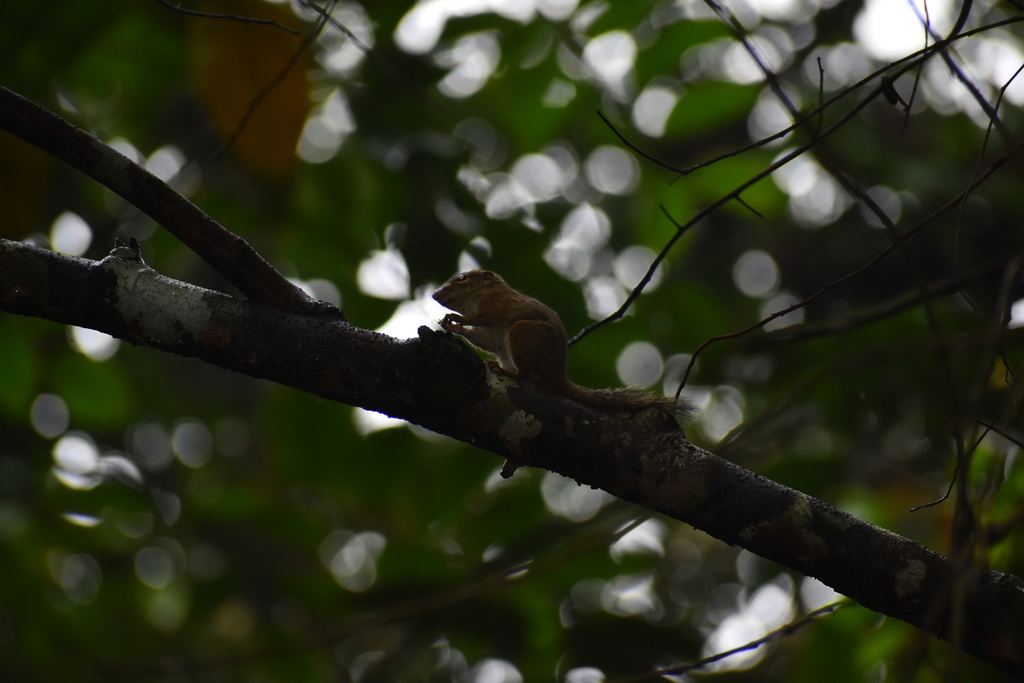
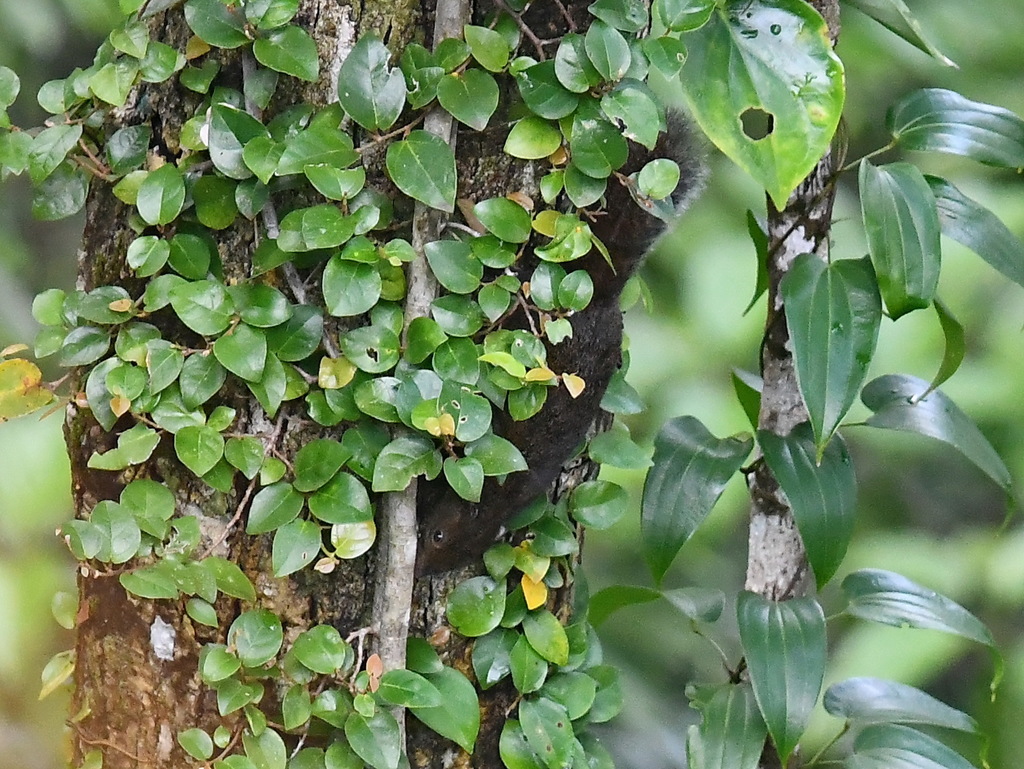
Robinson’s Squirrel — related tree squirrel visual context
RELATED TREE SQUIRRELRobinson’s SquirrelSundasciurus robinsoni — related group reference for visual comparison; not Shrew-faced Squirrel.(c) Mok Zhuang Yu, some rights reserved (CC BY) · CC-BY · VIEW SOURCE ↗
Samar Squirrel — related tree squirrel visual context
RELATED TREE SQUIRRELSamar SquirrelSundasciurus samarensis — related group reference for visual comparison; not Shrew-faced Squirrel.(c) stefanie_de_win, some rights reserved (CC BY-NC) · CC-BY-NC · VIEW SOURCE ↗
04

Identification & Physical Profile

Body lengthTotal length reported ~290–392 mm
Tail lengthIncluded within total length; species has a comparatively long tail
WeightUnknown
AppearanceA highly distinctive terrestrial squirrel with an elongated, pointed muzzle, reduced upper incisors and a long tongue. Dorsal fur is brown while the underside is pale buff to whitish.

A highly distinctive terrestrial squirrel with an elongated, pointed muzzle, reduced upper incisors and a long tongue. Dorsal fur is brown while the underside is pale buff to whitish.

FIELD / REFERENCE CLUES
Very long shrew-like muzzle
Terrestrial forest-floor behavior
Brown upperparts
Pale underside
Long tongue
Reduced upper incisors
05 · BEHAVIOR & ACTIVITY

How it behaves

Terrestrial and primarily forest-floor foraging; detailed activity-cycle studies are limited.

Social system: Unknown

Communication: Unknown

06 · DIET & FORAGING

What it eats

Strongly insectivorous relative to most squirrels. Documented foods include ants, termites, earthworms, beetles and other invertebrates, with fruit also taken.

Ants
Termites
Earthworms
Beetles and other invertebrates
Fruit
07

Reproduction & Development

Breeding seasonUnknown
GestationUnknown
Litter sizeUnknown
DevelopmentUnknown

When a value is shown as Unknown, the reviewed species-specific sources did not support a reliable figure. Values from related squirrels are not substituted.

BEHAVIOR & FORAGING CONTEXT

Keep behavior connected to the animal

These are related tree squirrels, not photographs of Shrew-faced Squirrel. Use them as visual context for locomotion, posture, feeding and environmental use.

Southern Palawan Tree Squirrel — related tree squirrel visual context
RELATED TREE SQUIRRELSouthern Palawan Tree SquirrelSundasciurus steerii — related group reference for visual comparison; not Shrew-faced Squirrel.(c) kurtcabahug, some rights reserved (CC BY-NC) · CC-BY-NC · VIEW SOURCE ↗
Malayan Mountain Squirrel — related tree squirrel visual context
RELATED TREE SQUIRRELMalayan Mountain SquirrelSundasciurus tahan — related group reference for visual comparison; not Shrew-faced Squirrel.(c) Wich’yanan (Jay) Limparungpatthanakij, some rights reserved (CC BY-NC) · CC-BY-NC · VIEW SOURCE ↗
08 · LONGEVITY

Lifespan

Unknown

08 · PREDATORS

Predation & Risk

Unknown

09

Ecology & Ecosystem Role

Its elongated rostrum and tongue are specialized for extracting invertebrate prey from litter and crevices, giving it an ecological role unlike that of typical nut-focused tree squirrels.

GROUP DIVERSITY

See the wider group around this species

Squirrels in the same broad group can look and live very differently. These credited references provide comparison without changing the facts for Shrew-faced Squirrel.
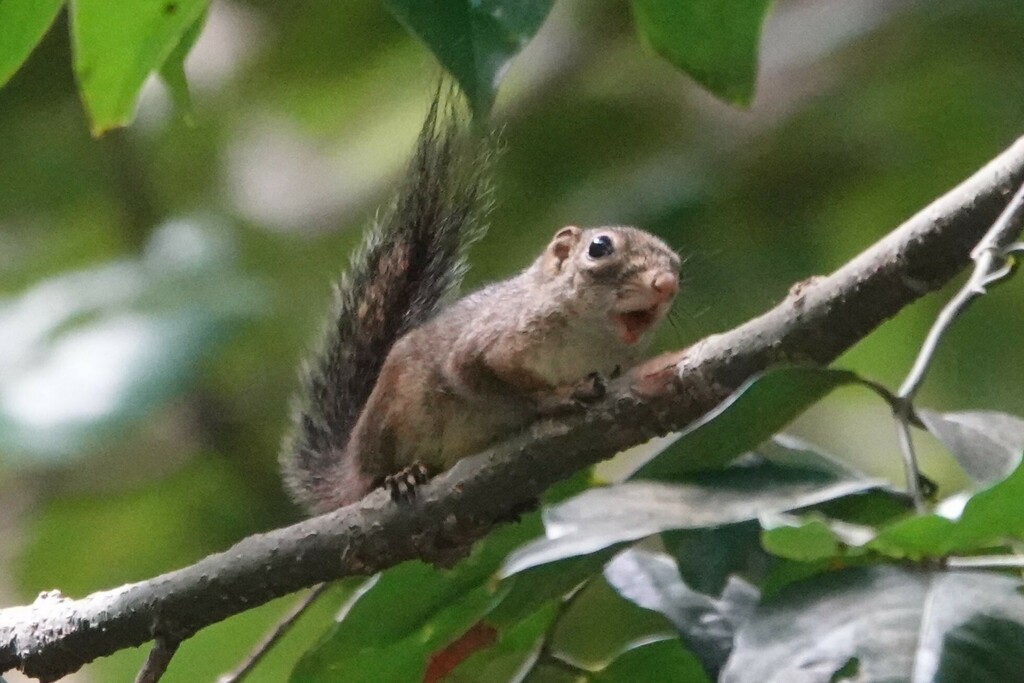
Lowland Slender Squirrel — related tree squirrel visual context
RELATED TREE SQUIRRELLowland Slender SquirrelSundasciurus tenuis — related group reference for visual comparison; not Shrew-faced Squirrel.(c) Soh Kam Yung, some rights reserved (CC BY-NC) · CC-BY-NC · VIEW SOURCE ↗
Bangs's Mountain Squirrel — related tree squirrel visual context
RELATED TREE SQUIRRELBangs's Mountain SquirrelSyntheosciurus brochus — related group reference for visual comparison; not Shrew-faced Squirrel.(c) Dan Riley, some rights reserved (CC BY) · CC-BY · VIEW SOURCE ↗
10

Conservation

STATUSNear Threatened

Current MDD treatment lists the Shrew-faced Squirrel as Near Threatened. Loss and degradation of Sundaic lowland forest are important conservation pressures across much of its range.

11

Research Coverage & Unknowns

Morphology and diet are relatively well characterized; reproduction, lifespan, social system and detailed movement ecology remain poorly documented.

12

References & Further Reading

Taxonomy and conservation are anchored to current mammal references. Natural-history claims use species-specific sources where available; unsupported fields remain Unknown.