
02 · NATIVE RANGE
Distribution
Endemic to Sulawesi, Indonesia. Records are associated with the island's montane forests, including the central and southern mountain systems.
COUNTRIES / REGIONIndonesia (Sulawesi)
Hyosciurus heinrichi
Current name: Hyosciurus heinrichi. Current MDD: Least Concern
Type / taxonomic context: Latimodjong Mountains, southern Sulawesi, Indonesia; type locality recorded at about 2,300 m
Endemic to Sulawesi, Indonesia. Records are associated with the island's montane forests, including the central and southern mountain systems.
Cool, wet and mossy montane forest, especially hillsides, ridges and stream-associated forest. Most observations are from roughly 1,000–2,400 m, with the species more characteristic of upper montane habitat.
A terrestrial to semi-fossorial squirrel. Observations indicate use of burrows and shelter in or beneath fallen logs. A tree-drey lifestyle should not be assumed for this species.
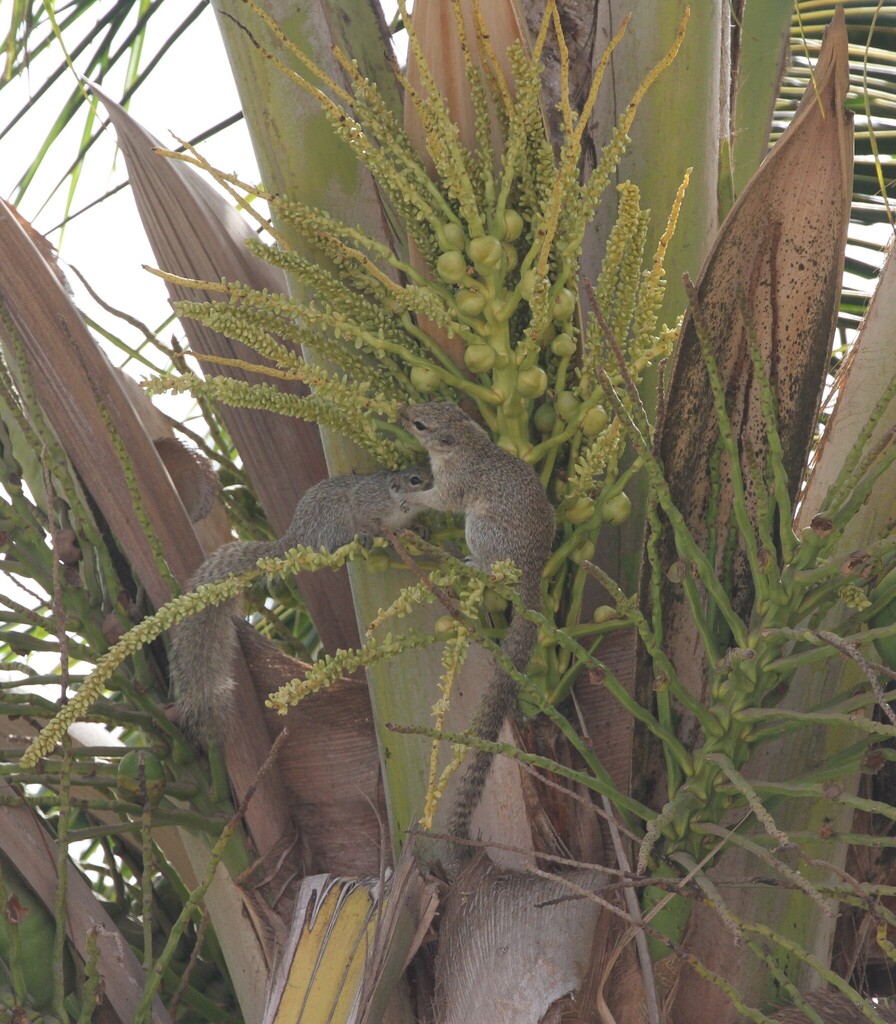
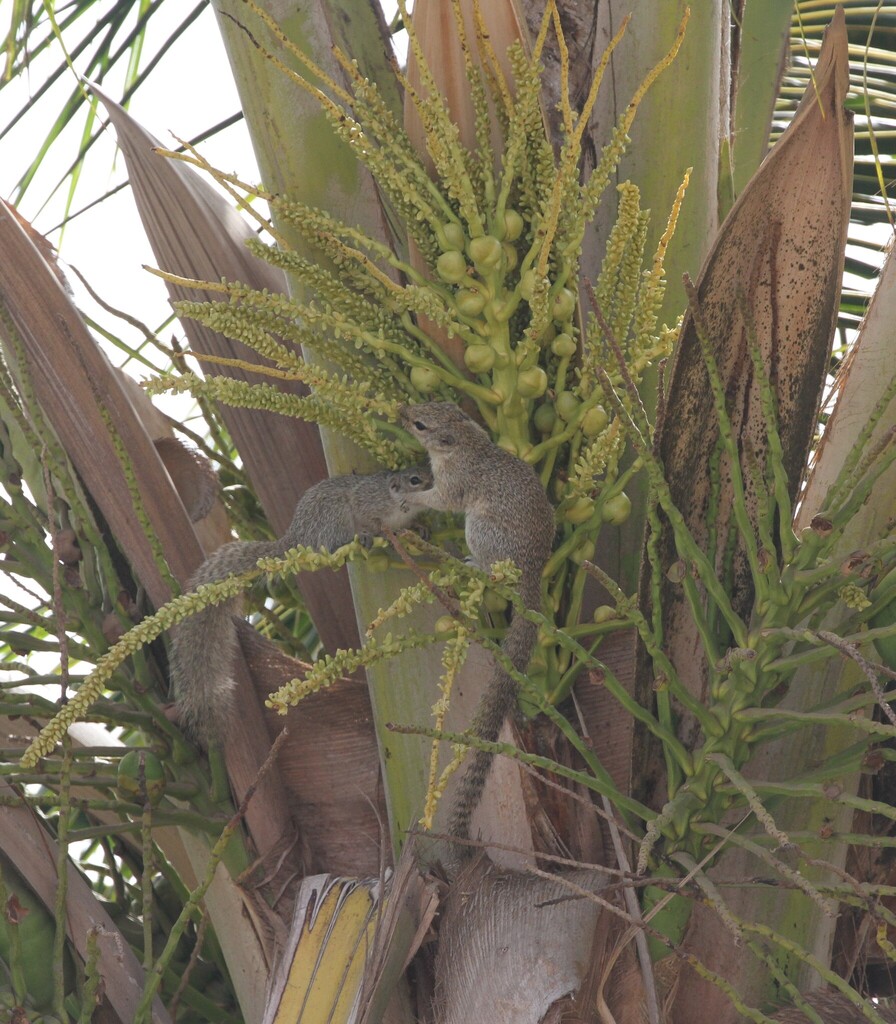
Related tree squirrels help break up the reference while showing how habitat, body form and movement can vary across the broader group.
A compact, dark squirrel with tawny speckling, short rounded ears and an unusually elongated nasal region. The tail is short relative to the head-and-body length. Long, strongly curved claws suit digging and rooting through litter.
Diurnal; terrestrial and semi-fossorial, although it may climb onto low moss-covered trunks while foraging.
Social system: Usually observed alone. Group size and territorial organization remain poorly documented.
Communication: Produces light single chirps that become faster under distress, along with squirrel-like chatter. Smell is important during foraging.
Insectivorous and frugivorous. Documented foods include beetles, ants, insect larvae, centipedes, cockroaches, fruit and acorns. The elongated muzzle and claws are used to probe leaf litter and moss.
When a value is shown as Unknown, the reviewed species-specific sources did not support a reliable figure. Values from related squirrels are not substituted.
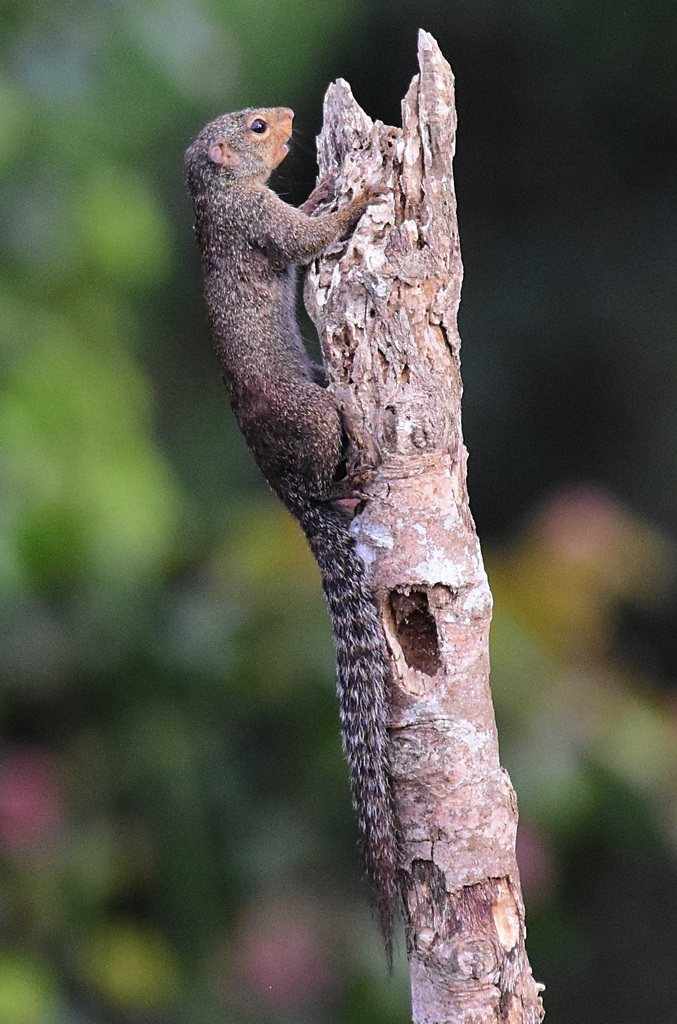
These are related tree squirrels, not photographs of Montane Long-nosed Squirrel. Use them as visual context for locomotion, posture, feeding and environmental use.

No reliable species-specific wild or captive lifespan has been published.
Specific predation rates are unknown. Potential predators within its range include raptors, snakes and small carnivorous mammals.
Rooting and burrowing disturb forest-floor substrate. Acorn feeding can move viable seed material, while the squirrel is also prey for Sulawesi forest predators and host to ectoparasites.
Squirrels in the same broad group can look and live very differently. These credited references provide comparison without changing the facts for Montane Long-nosed Squirrel.


MDD lists the species as Least Concern. It has a restricted island distribution, so continued montane-forest integrity remains important even though the species is not currently categorized as threatened.
Natural-history information is unusually good for a rare Sulawesi squirrel in some areas—especially morphology, foraging and vocal behavior—but reproduction, demography and lifespan remain poorly known.
Taxonomy and conservation are anchored to current mammal references. Natural-history claims use species-specific sources where available; unsupported fields remain Unknown.