TREE SQUIRRELS · SPECIES PROFILE

Fremont’s Squirrel

Tamiasciurus fremonti

Least Concern
Back to Tree Squirrels →
Body length18–23 cm (7–9 in)
Tail length10–15 cm (4–6 in)
Weight200–250 g
Fur colorReddish-brown to rust-colored
Breeding seasonLate winter to early spring
Gestation~35–38 days
01

Classification

KingdomAnimalia
PhylumChordata
ClassMammalia
OrderRodentia
FamilySciuridae
GenusTamiasciurus
SpeciesTamiasciurus fremonti
NATIVE RANGE

Where it is found

Fremont’s Red Squirrel is native to western North America.

Its range includes:

It occurs primarily in mountainous forest regions of the western U.S. and northern Mexico.

Western United States
Rocky Mountain region
Southwestern United States
Northern Mexico
HABITAT

Where it lives

Fremont’s Red Squirrels inhabit coniferous and montane forests.

Typical habitats include:

They are strongly associated with mature conifer forests that provide cone-producing trees.

Pine forests
Spruce-fir forests
Mixed conifer forests
Mountain woodlands
RANGE & HABITAT CONTEXT

Compare form, setting and structure

Related tree squirrels help break up the reference while showing how habitat, body form and movement can vary across the broader group.

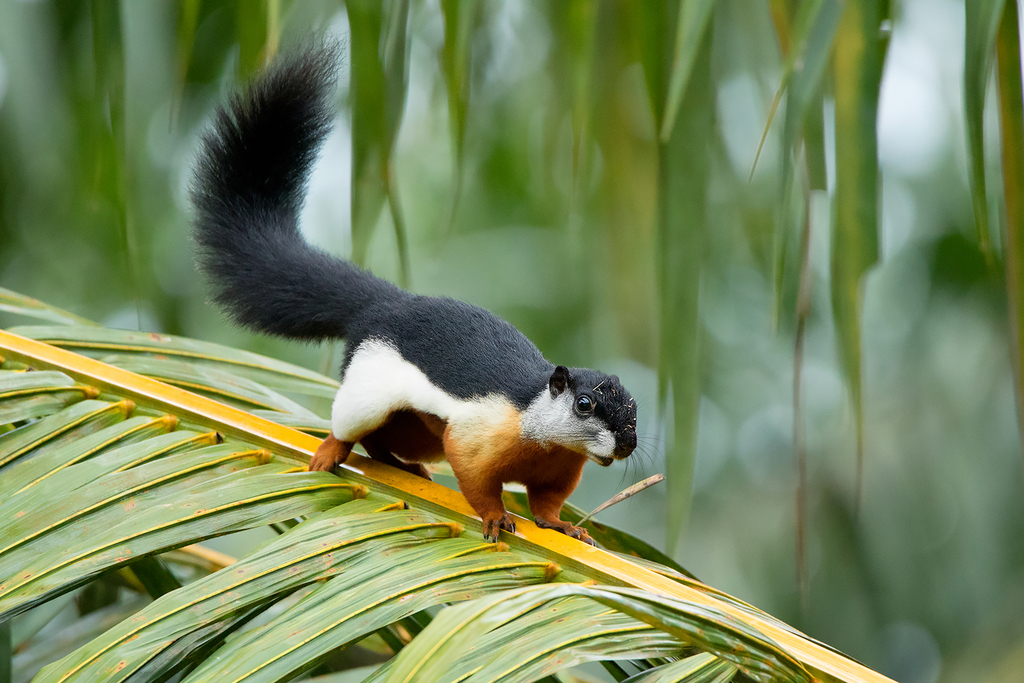
Finlayson’s Squirrel — related tree squirrel visual context
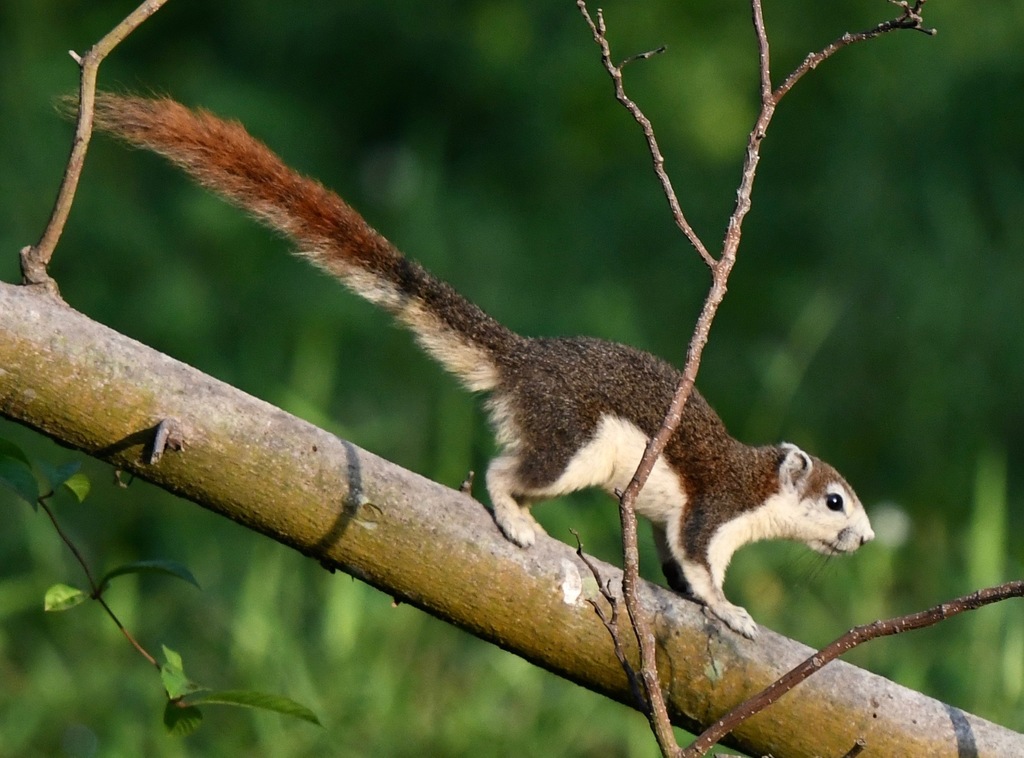
RELATED TREE SQUIRRELFinlayson’s SquirrelCallosciurus finlaysonii — related group reference for visual comparison; not Fremont’s Squirrel.(c) marcelfinlay, some rights reserved (CC BY-NC) · CC-BY-NC · VIEW SOURCE ↗
Prevost’s Squirrel — related tree squirrel visual context
RELATED TREE SQUIRRELPrevost’s SquirrelCallosciurus prevostii — related group reference for visual comparison; not Fremont’s Squirrel.(c) ayuwat, some rights reserved (CC BY-NC) · CC-BY-NC · VIEW SOURCE ↗
03

Nest & Shelter

Fremont’s Red Squirrels build nests known as dreys in trees.

Typical nest characteristics include:

They also frequently use tree cavities or abandoned woodpecker holes.

Constructed from twigs, bark strips, moss, and leaves
Located in tree branches or forks
Sometimes built close to the trunk for support
Used for sleeping and raising young
04

Physical Profile

Body length18–23 cm (7–9 in)
Tail length10–15 cm (4–6 in)
Weight200–250 g
Fur colorReddish-brown to rust-colored
BellyWhite or pale gray
Distinct featureProminent white eye ring
TailModerately bushy

Their reddish fur and bold eye rings give them a distinctive appearance among North American squirrels.

BEHAVIOR & FORAGING CONTEXT

Keep behavior connected to the animal

These are related tree squirrels, not photographs of Fremont’s Squirrel. Use them as visual context for locomotion, posture, feeding and environmental use.

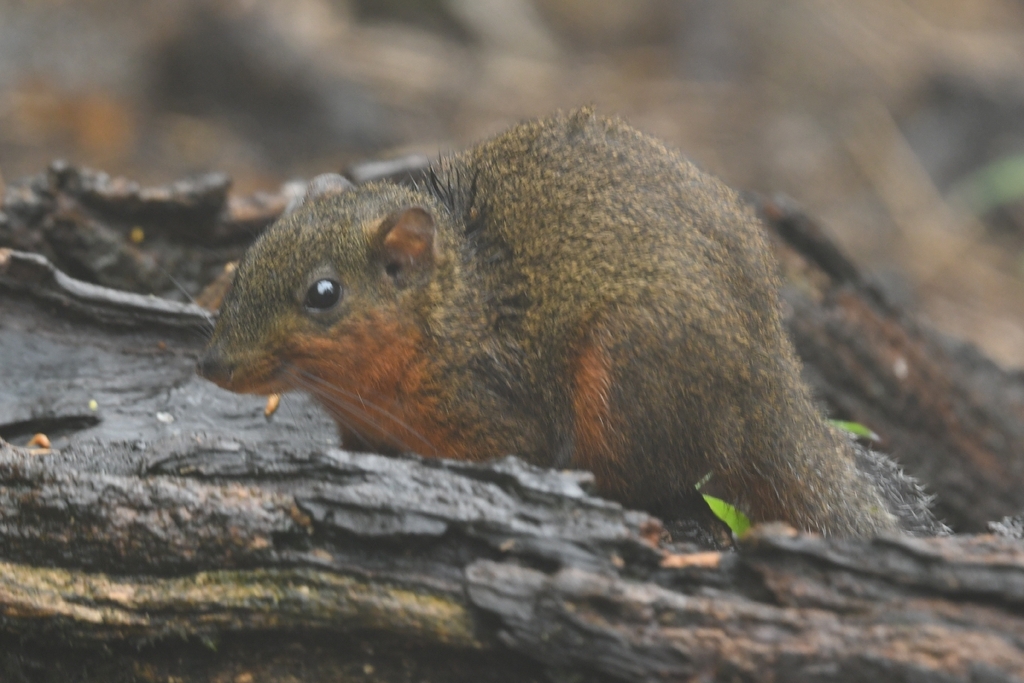
Red-throated Squirrel — related tree squirrel visual context
RELATED TREE SQUIRRELRed-throated SquirrelDremomys gularis — related group reference for visual comparison; not Fremont’s Squirrel.(c) Diep Dai Tung, some rights reserved (CC BY-NC) · CC-BY-NC · VIEW SOURCE ↗
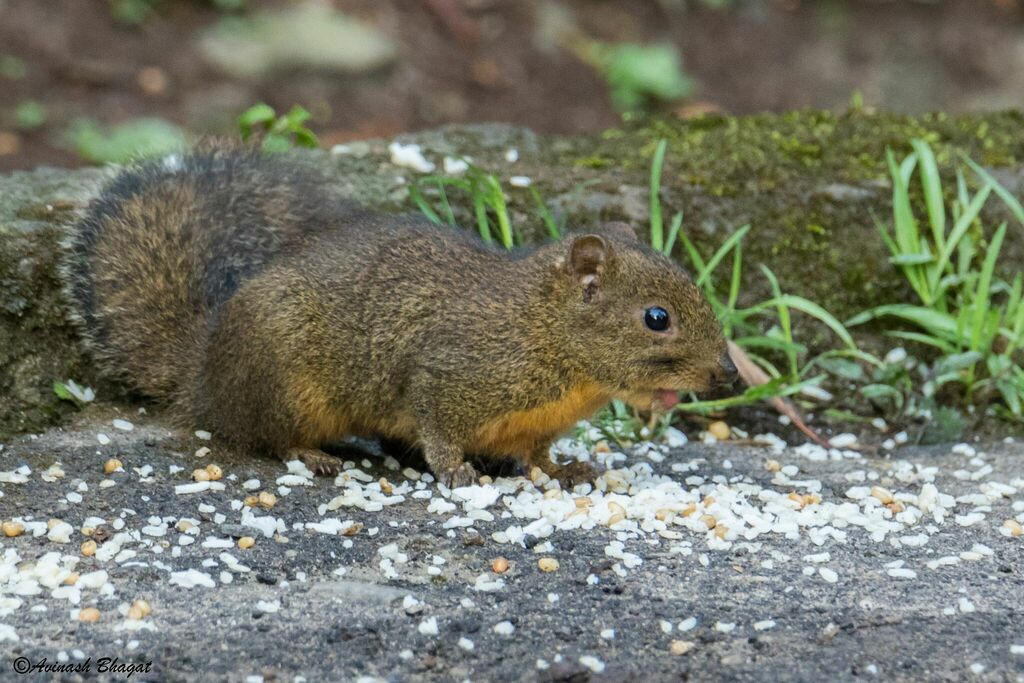
Orange-bellied Himalayan Squirrel — related tree squirrel visual context
RELATED TREE SQUIRRELOrange-bellied Himalayan SquirrelDremomys lokriah — related group reference for visual comparison; not Fremont’s Squirrel.(c) Avinash Bhagat, some rights reserved (CC BY-NC) · CC-BY-NC · VIEW SOURCE ↗
BEHAVIOR

How it behaves

Fremont’s Red Squirrels are diurnal and highly territorial.

Typical behaviors include:

They maintain cone storage piles called middens, which serve as important winter food reserves.

Defending feeding territories
Gathering and storing large numbers of pine cones
Producing loud chattering alarm calls
Rapid climbing and jumping through tree branches
DIET

What it eats

Fremont’s Red Squirrels are primarily herbivorous.

Common foods include:

They play an important role in forest seed dispersal and fungal spore distribution.

Pine cones
Spruce cones
Seeds
Nuts
Tree buds
Fungi
Occasionally insects or bird eggs
GROUP DIVERSITY

See the wider group around this species

Squirrels in the same broad group can look and live very differently. These credited references provide comparison without changing the facts for Fremont’s Squirrel.

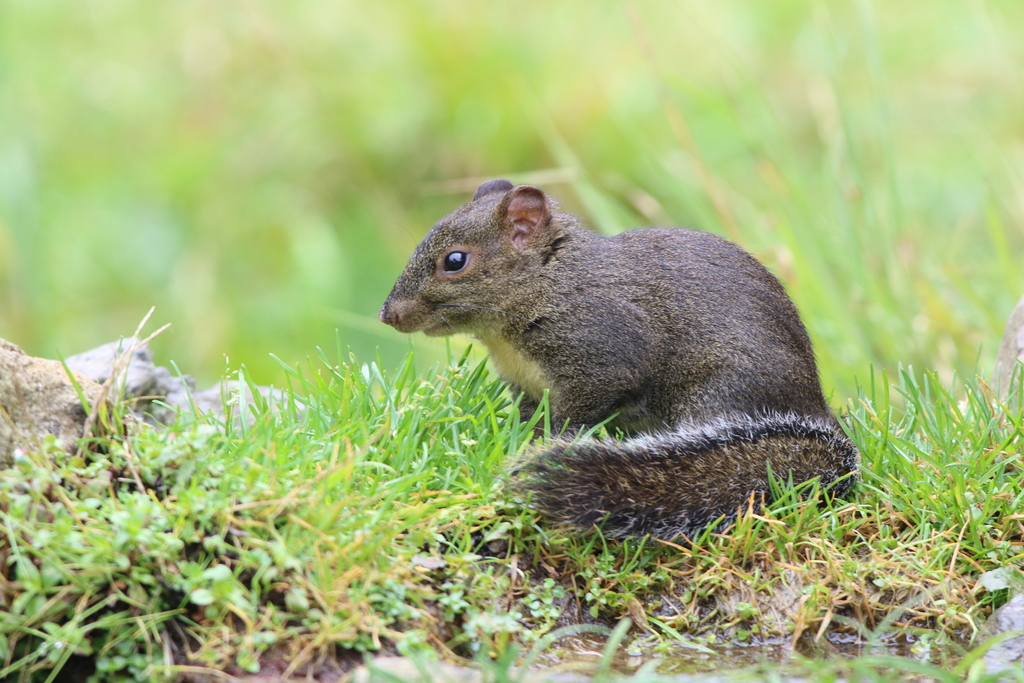
Perny's Long-nosed Squirrel — related tree squirrel visual context
RELATED TREE SQUIRRELPerny's Long-nosed SquirrelDremomys pernyi — related group reference for visual comparison; not Fremont’s Squirrel.(c) Hong, some rights reserved (CC BY-NC) · CC-BY-NC · VIEW SOURCE ↗
Red-hipped Squirrel — related tree squirrel visual context
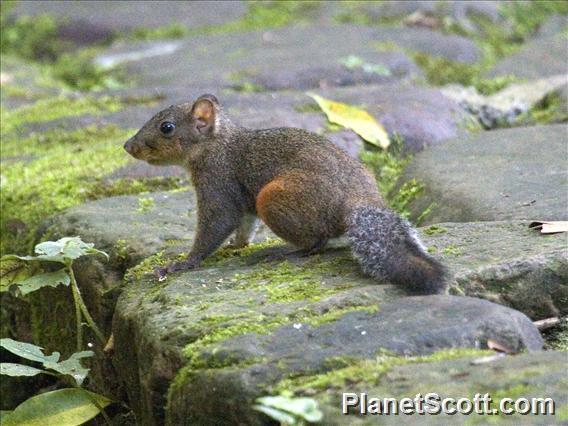
RELATED TREE SQUIRRELRed-hipped SquirrelDremomys pyrrhomerus — related group reference for visual comparison; not Fremont’s Squirrel.(c) Scott Bowers, some rights reserved (CC BY-NC) · CC-BY-NC · VIEW SOURCE ↗
REPRODUCTION

Breeding & Young

Breeding seasonLate winter to early spring
Gestation~35–38 days
Litter size2–5 young

Young squirrels are raised in dreys or tree cavities.

LIFESPAN

Longevity

Unknown

07

Conservation

STATUS Least Concern

IUCN Status: Least Concern

Fremont’s Red Squirrel has a wide distribution across western North America and is not currently considered threatened.