


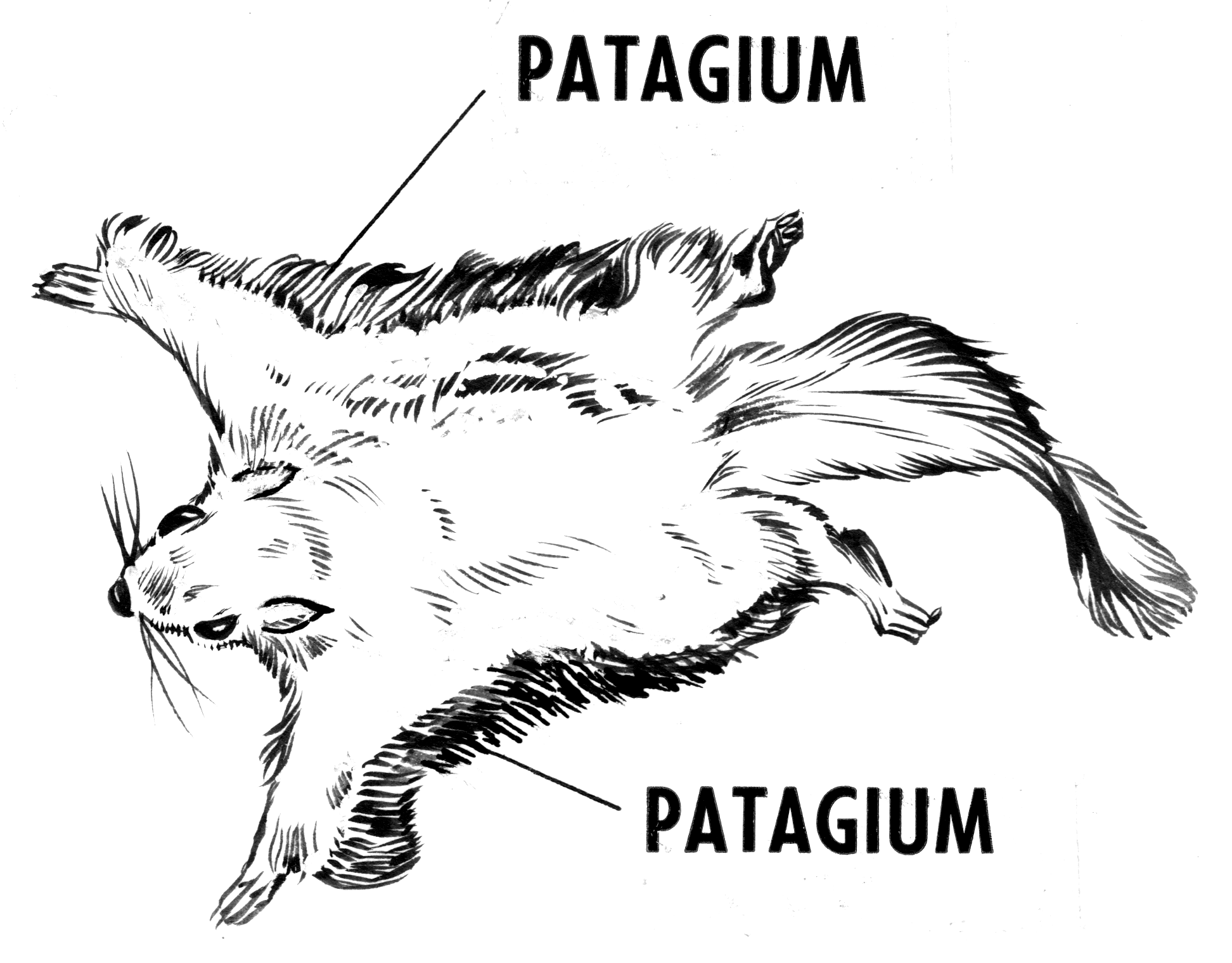

A flying squirrel’s final enclosure should provide safe vertical height, horizontal launch/landing opportunities and natural surfaces. The animal must learn to leave a perch, control the glide, steer, land securely and immediately transition back into climbing.
- Predator-resistant and escape-proof construction
- Multiple vertical trunks/branches with varied diameters and textures
- Clear glide lanes between launch and landing surfaces
- Enough room for repeated practice without collision hazards
- Familiar enclosed nest box
- Weather protection and natural temperature/light cycle appropriate to season
- Low human traffic, no pet exposure
Social conditioning
Compatible flyers being raised together should continue building normal nest, play and foraging behavior as a group. When release together is appropriate, the familiar social group and nest box can reduce the abruptness of the transition. Do not create a last-minute release group without quarantine and compatibility planning.