
Check which squirrels it describes
Tree, flying and ground squirrels can solve the same survival problem in very different ways.
A growing reference of squirrel facts organized by subject, with enough context to show where a fact applies, where it varies, and where to keep reading.
“Squirrel” covers far more than the familiar animal on a backyard tree. Sciuridae includes tree squirrels, flying squirrels, chipmunks, prairie dogs, marmots and other ground squirrels, so a fact that is useful for one group may be wrong for another.
Use this page for compact, sourced explanations. For a specific animal, continue into the Species Directory; for practical rescue or care decisions, move to the Guide.

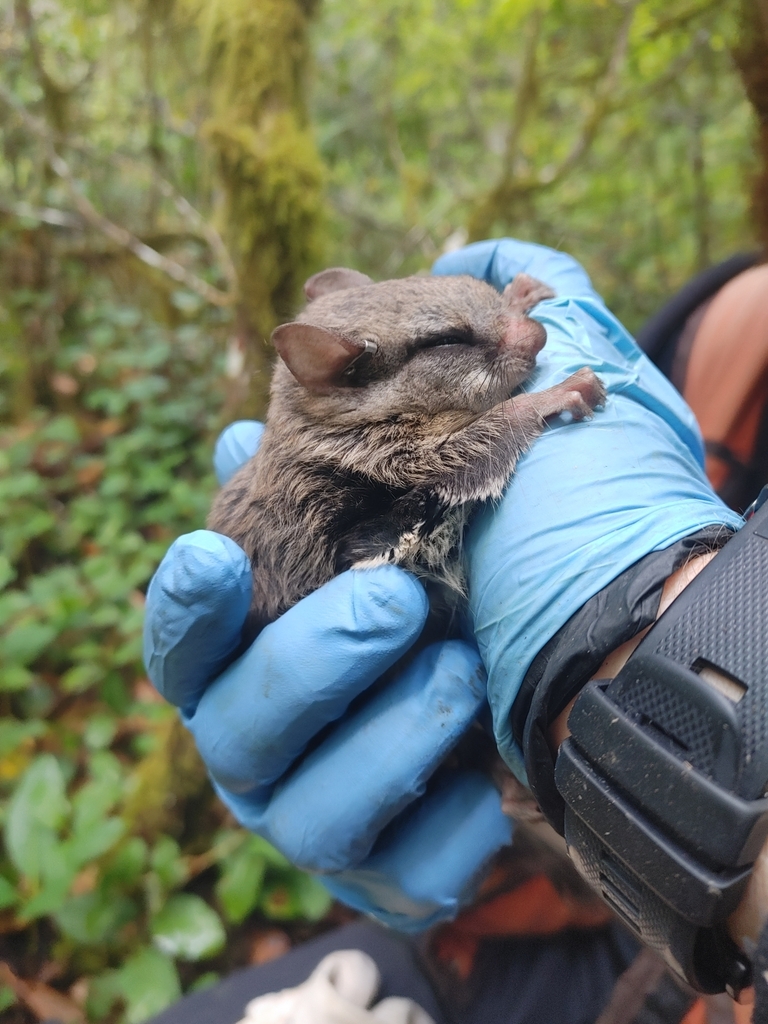

A useful wildlife fact should identify its scope instead of quietly turning one species, one study or one behavior into a rule for every squirrel.
Tree, flying and ground squirrels can solve the same survival problem in very different ways.
Season, habitat, age, social setting and food availability can change what an observer sees.
The species pages are the better place for range, habitat, size, diet and conservation details.
Open Species Directory →The source section at the end of this page is there so a compact fact never has to be the end of the trail.
Jump to sources →Each entry is written as a compact fact with enough context to avoid turning a true statement into an overgeneralization.
Prairie dogs are members of Sciuridae, within the ground-squirrel side of the family.
Groundhogs and other marmots belong to Sciuridae.
Chipmunks are also members of the squirrel family.
They are not marsupial gliders; flying squirrels are rodents in Sciuridae.
These familiar labels are useful ecologically, but formal taxonomy uses subfamilies, tribes, genera and species.
Taxonomic revisions can split, merge or move species, so scientific names should be checked against current mammal taxonomy.
Each entry is written as a compact fact with enough context to avoid turning a true statement into an overgeneralization.
The patagium produces lift after a leap from height; there is no powered wingbeat.
A styliform cartilage helps support the gliding membrane and contributes to an aerodynamic wing tip.
Depending on the species and context, the tail can aid body control, signaling and thermoregulation.
Burrows buffer animals from surface temperature extremes and provide shelter from predators.
Trunks, branches and repeated jump paths create a vertical travel network.
Larger flying squirrels operate with different wing loading and optimal glide speeds than smaller species.
Each entry is written as a compact fact with enough context to avoid turning a true statement into an overgeneralization.
Some squirrels defend centralized larders; others distribute food among many caches.
Experimental work found spatial patterns consistent with a memory strategy known as chunking.
Cache-like digging can occur without leaving food when competitors may be watching.
Northern flying squirrels consume diverse fungi, including truffles.
Squirrel diets can also include fruits, buds, flowers, vegetation, fungi and opportunistic animal foods.
Some buried seeds survive and germinate, making caching one pathway for seed dispersal.
Each entry is written as a compact fact with enough context to avoid turning a true statement into an overgeneralization.
Research has found acoustic variation associated with characteristics of a threat.
Many tree squirrels interact intensely during mating, territorial encounters and maternal care.
Communal denning can occur, particularly under cold conditions.
Their social system includes repeated interactions, alarm calling and shared use of colony habitat.
A flicking tail can occur during alarm or social arousal, but the surrounding behavior determines interpretation.
Chasing and physical play can contribute to locomotor and social development.
Each entry is written as a compact fact with enough context to avoid turning a true statement into an overgeneralization.
Many tree squirrels remain active all winter.
They can spend most of the year in hibernation and allow body temperature to fall below freezing during torpor.
They do not enter the same prolonged true hibernation as some ground squirrels.
Cached food can support active squirrels when fresh food is limited.
Mating periods can produce long chases and increased encounters.
Activity, appetite, nesting and social tolerance may all shift through the year.
Each entry is written as a compact fact with enough context to avoid turning a true statement into an overgeneralization.
Burrowing and grazing alter vegetation and provide shelter opportunities for other animals.
Mycophagy connects squirrels with ectomycorrhizal fungal networks.
They consume many seeds while also transporting and caching others.
Reduced fear of routine human presence does not make a wild population domesticated.
Wildlife agencies warn about crowding, conflict, disease transmission and inappropriate diets.
When a species has not been adequately studied, preserving the gap is more accurate than filling it with a guess.
These sources support the major biological and behavioral points on this page and provide deeper reading.