Activityprimarily diurnal chipmunk; seasonal activity and torpor vary by species and climate
ConservationLeast Concern
Countries / regionChina · Japan · Kazakhstan · Mongolia · North Korea · Russia · South Korea
01
Classification & Current Taxonomy
KingdomAnimalia
PhylumChordata
ClassMammalia
OrderRodentia
FamilySciuridae
SubfamilyXerinae
TribeTamiini
GenusEutamias
SpeciesEutamias sibiricus
MDD taxon ID1001719
Current MDD v2.5 recognizes Eutamias sibiricus as a living species in family Sciuridae, subfamily Xerinae, tribe Tamiini.
02 · DISTRIBUTION
Where it occurs
Current MDD country distribution: China · Japan · Kazakhstan · Mongolia · North Korea · Russia · South Korea. Biogeographic realm: Palearctic.
Country-level distribution is a broad reference and does not mean the species occurs throughout every listed country or state.
02 · HABITAT
Where it lives
Chipmunks occupy woodland, shrubland, rocky, montane and edge habitats depending on species. Exact elevation and vegetation associations remain species-specific.
03
Shelter, Burrows & Resting Sites
Chipmunks use protected sites such as burrows, rock crevices, woody cover or cavities depending on species and season. The exact den type for this species is not assigned without direct evidence.
RANGE & HABITAT CONTEXT
Compare form, setting and structure
Related ground squirrels help break up the reference while showing how habitat, body form and movement can vary across the broader group.
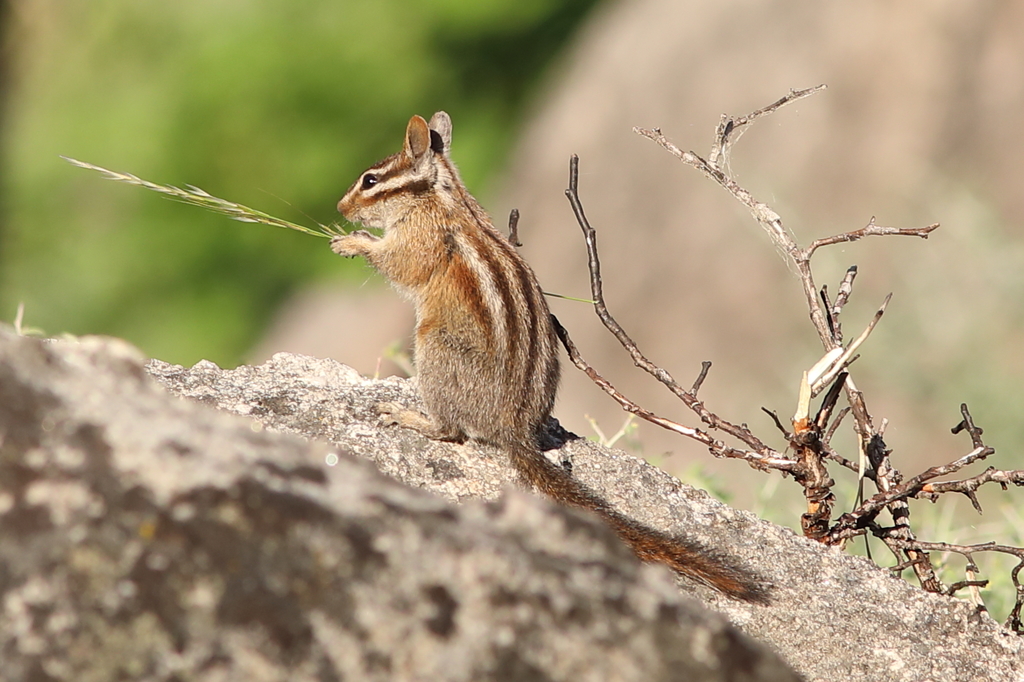
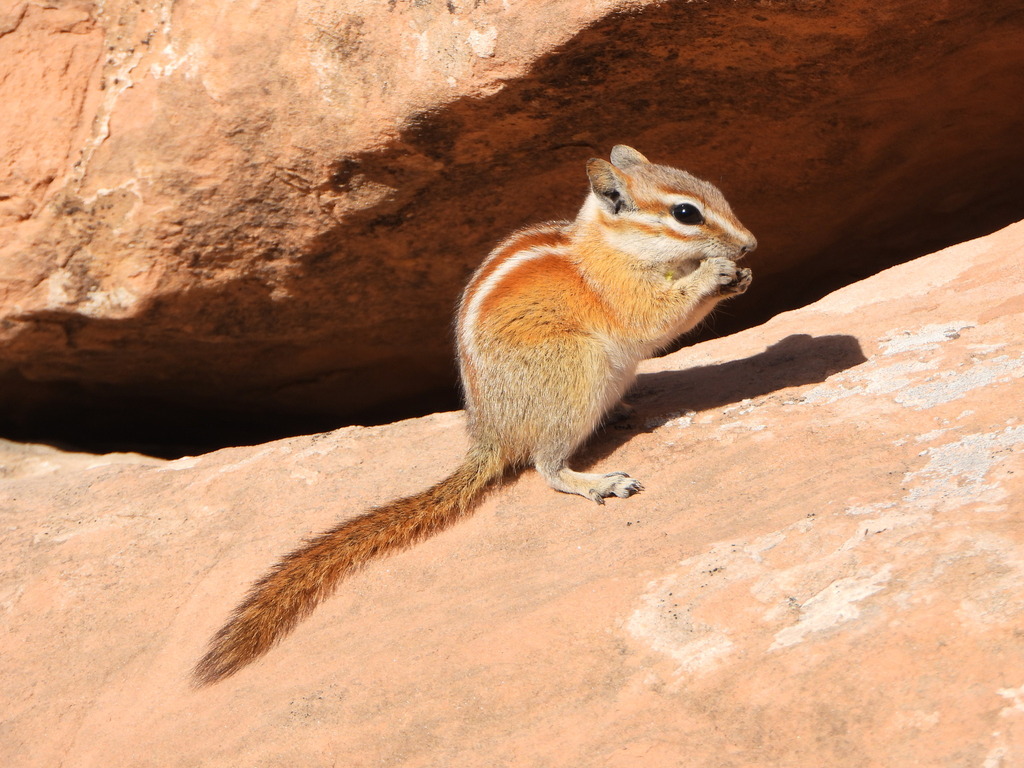
RELATED GROUND SQUIRRELPalmer’s ChipmunkNeotamias palmeri — related group reference for visual comparison; not Siberian Chipmunk.(c) Ari Rice, some rights reserved (CC BY-NC) · CC-BY-NC · VIEW SOURCE ↗RELATED GROUND SQUIRRELPanamint ChipmunkNeotamias panamintinus — related group reference for visual comparison; not Siberian Chipmunk.(c) bretthartl, some rights reserved (CC BY-NC) · CC-BY-NC · VIEW SOURCE ↗
04
Identification & Physical Profile
Body lengthUnknown
Tail lengthUnknown
WeightUnknown
AppearanceSpecies-specific adult measurements and diagnostic pelage details are not yet sufficiently standardized in available species-specific references.
Measurements are left Unknown until they can be tied to reliable species-specific sources. This avoids mixing sex, age, season or subspecies ranges from unrelated references.
05
Terrestrial Adaptations & Burrowing
Chipmunks combine rapid ground movement and climbing with well-developed cheek pouches for transporting food. Digging, caching and seasonal torpor vary across the group.
06
Behavior, Activity & Communication
Activity: primarily diurnal chipmunk; seasonal activity and torpor vary by species and climate
Behavior & communication: Chipmunks are mainly diurnal. Many are territorial or loosely social outside mating periods and communicate with calls, scent and posture; exact behavior varies by species.
BEHAVIOR & FORAGING CONTEXT
Keep behavior connected to the animal
These are related ground squirrels, not photographs of Siberian Chipmunk. Use them as visual context for locomotion, posture, feeding and environmental use.
RELATED GROUND SQUIRRELLong-eared ChipmunkNeotamias quadrimaculatus — related group reference for visual comparison; not Siberian Chipmunk.(c) R.J. Adams, some rights reserved (CC BY-NC) · CC-BY-NC · VIEW SOURCE ↗RELATED GROUND SQUIRRELRed-tailed ChipmunkNeotamias ruficaudus — related group reference for visual comparison; not Siberian Chipmunk.(c) Yinan Li, some rights reserved (CC BY-NC) · CC-BY-NC · VIEW SOURCE ↗
07
Diet & Foraging
Group context: seeds, fruits, fungi and other plant material are common foods, often supplemented by invertebrates or other animal matter. Species-specific diet remains more detailed than this group summary.
Species-specific diet details remain incomplete
08
Reproduction & Development
Breeding seasonUnknown
GestationUnknown
Litter sizeUnknown
DevelopmentUnknown
Unknown values remain explicit. Reproductive figures from related ground squirrels are not silently substituted for this species.
09 · LONGEVITY
Lifespan
Unknown
09 · PREDATORS
Predation & Risk
Chipmunks are preyed on by raptors, snakes and mammalian carnivores; risk differs with habitat and locality.
10
Ecology & Ecosystem Role
Seed handling and caching can influence plant dispersal and recruitment, while chipmunks also move nutrients between ground and woody habitats.
GROUP DIVERSITY
See the wider group around this species
Squirrels in the same broad group can look and live very differently. These credited references provide comparison without changing the facts for Siberian Chipmunk.
RELATED GROUND SQUIRRELHopi ChipmunkNeotamias rufus — related group reference for visual comparison; not Siberian Chipmunk.(c) Yinan Li, some rights reserved (CC BY-NC) · CC-BY-NC · VIEW SOURCE ↗RELATED GROUND SQUIRRELAllen's ChipmunkNeotamias senex — related group reference for visual comparison; not Siberian Chipmunk.(c) My World of Bird Photography, some rights reserved (CC BY-NC) · CC-BY-NC · VIEW SOURCE ↗
11
Conservation
CURRENT MDD / IUCN STATUSLeast Concern
The status above follows the current MDD v2.5 field for this accepted taxon. Country-level range and conservation category can change as assessments and taxonomy are updated.
12
Research Coverage & Unknowns
Taxonomy, country distribution and conservation category are anchored to MDD v2.5. Unsupported measurements, reproductive values and lifespan remain Unknown rather than inferred from related species.
Group context: Chipmunk context: small, mostly diurnal squirrels with cheek pouches and strong food-caching behavior; habitat and seasonal dormancy vary substantially among species.
13
References & Further Reading
Taxonomy, country distribution and conservation status follow Mammal Diversity Database v2.5; broader family biology is used only as clearly labeled context.